

The four-layer agent framework, five production lessons, and a citation-outreach fleet built for cross-engine AI search.
Track how your business appears across Google Search, Maps, and Gemini. Listings, reviews, and competitor signals all in one view.
What to measure, which signals to prioritize, and how to guide automation before AI Max becomes the default.
Learn which tasks to assign AI, which require an editor, and how to use engagement data to prioritize your calendar.
Reddit outranks your brand in AI answers. Learn the 5 plays multi-location brands use to fix that, straight from Uberall and Reddit.
A practical checklist for using AI where it produces measurable pipeline and revenue impact in 2026.
🔥Keystone Cohort: Be the AI-Cited Source — Content Structure & Schema
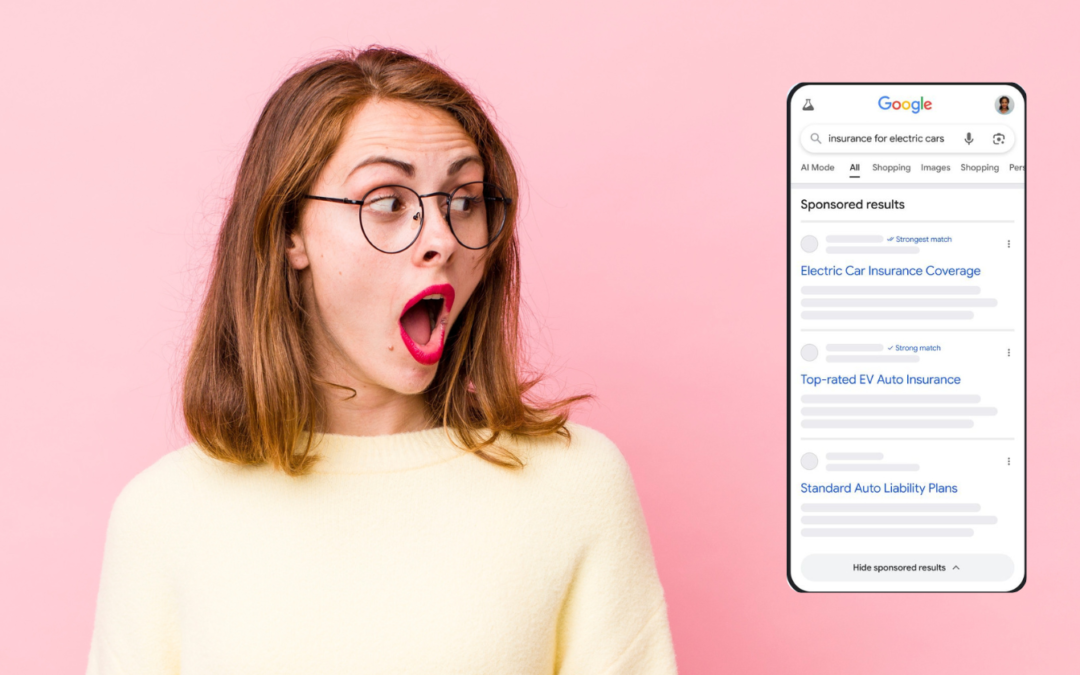
Google is testing ‘Strongest match’ and ‘Strong match’ labels on Search ads in the US. Here’s what the relevance badge means for your PPC campaigns.
Google is testing a new Search ads label that could give certain advertisers a visible endorsement directly within search results.
In a LinkedIn post, Google Ads Liaison Ginny Marvin announced a limited U.S. experiment that adds a “Strongest match” or “Strong match” label to select Search ads.
According to Marvin, the labels are intended to help users quickly identify the most relevant information for their query while helping advertisers connect with high-intent audiences.
The experiment is currently rolling out to a small percentage of users in the United States.
Marvin said the designation relies on existing ad quality and relevance signals that Google already uses to evaluate Search ads.
While the announcement itself was relatively brief, it immediately sparked questions from advertisers about how the label is determined, whether it could influence click behavior, and what it might signal about the future direction of Search.
Google’s announcement answered what the label is intended to do, but not how advertisers qualify for it.
According to Marvin, the designation is based on existing quality and relevance signals. Beyond that, Google has not shared any details about how the label is determined.
As a result, advertisers still don’t know:
The lack of detail quickly became one of the main discussion points following the announcement.
Several advertisers questioned whether the designation reflects the same systems Google already uses to evaluate ad relevance or whether the experiment introduces an additional layer of evaluation.
Others questioned whether bid strength plays any role.
Google’s description suggests the label is intended to reflect relevance rather than spend. However, the company has not explained how those determinations are made.
Until Google shares more information, advertisers are left with a label that appears meaningful but lacks a clear definition.
Advertisers quickly focused on a different question: how Google determines which ads receive the label.
Several commenters asked whether “Strongest match” reflects the same relevance systems Google already uses or whether additional factors are involved.
Terry Hogan questioned whether the designation is truly based on relevance or whether bid strength contributes to the decision.
Kristen Kelleher asked a popular question, based on the amount of likes she got:
What components make up the scoring underneath the match label? Is this based on the keyword based quality score, ad relevance, landing page exp or is it only based on the ad itself?
So far, Google has not provided additional detail.
Other comments asked measurement questions around the label testing.
Craig Graham asked: “Are there plans for any kind of advertiser-side reporting for this if the experiment rolls out more broadly?”
That visibility could become important if the designation influences click behavior. Advertisers will likely want to know when their ads receive the label and whether it impacts performance.
Questions also accumulated in Marvin’s LinkedIn post about how the label will appear within search results.
Bernt Muurling asked whether the strongest match will always be the first result shown.
If the label only appears on the top-ranked ad, it reinforces Google’s existing ranking decisions. If it can appear elsewhere on the page, it introduces a new signal that users may evaluate alongside ad position.
Justin Windschitl pointed to what may be the biggest challenge for the experiment:
Interested what the criteria are for labeling “match types” and if there can be flaws with the labeling, hurting businesses. On the flip side, if it’s buttoned up, it could be very beneficial for filtering best matches and more effective ad spend!
If the designation is occasionally inaccurate, advertisers may question whether Google is effectively endorsing one business over another.
The experiment stands out because it could make Google’s assessment of relevance visible to users.
Advertisers have always known that Google evaluates factors such as ad relevance, landing page experience, expected click-through rate, and other quality signals when determining which ads appear and where they rank. Those evaluations largely happen behind the scenes.
A “Strongest match” label would move part of Google’s relevance evaluation from Google Ads into the user experience itself.
That may seem like a small change, but it introduces a new dynamic into the search experience.
Users already see ad position. A visible label gives them another signal to evaluate.
That is one reason several advertisers immediately questioned how the designation is determined and whether it could influence click behavior.
It also raises questions about whether the label becomes a competitive advantage of its own.
If users begin viewing the designation as a recommendation from Google, advertisers who receive the label could benefit beyond the visibility that comes with ranking well in the auction.
Whether that happens will likely depend on how often the label appears and whether users respond to it.
For now, Google has positioned the experiment as a way to help users identify relevant information more quickly. The broader question is whether advertisers and users eventually view the designation as a relevance signal, a recommendation, or something in between.
While Google hasn’t shared the reasoning behind the experiment, the test arrives as Search continues to evolve beyond a traditional list of links.
Google already makes relevance decisions every time an auction takes place. The difference is that those decisions typically remain behind the scenes.
This experiment tests what happens when part of that evaluation becomes visible to users.
Google already makes relevance decisions every time an auction takes place. This experiment tests whether those assessments should be visible to users.
Like many Search tests, the feature may never move beyond experimentation. If it does, it could mark another step toward Google making more of its relevance decisions visible within the Search experience itself.
At this point, advertisers should view the label as an experiment rather than a new optimization opportunity.
Google hasn’t introduced any controls, reporting, or guidance around how advertisers qualify for the designation.
For now, the announcement is getting a lot of attention because it introduces a new user-facing signal in Search ads. Whether that signal influences click behavior or campaign performance is unclear until Google provides more information.
We’ll continue watching the rollout and update this story if Google shares additional details about qualification criteria, reporting, or broader availability.
Featured image: Kues / Shutterstock, Phone image courtesy of Google
Brooke serves as the Director of Growth Marketing at Smith Micro Software, with over 10 years of paid media experience. …
Join 75,000+ Digital Leaders.
Learn how to connect search, AI, and PPC into one unstoppable strategy.
Join 75,000+ Digital Leaders.
Learn how to connect search, AI, and PPC into one unstoppable strategy.
Join 75,000+ Digital Leaders.
Learn how to connect search, AI, and PPC into one unstoppable strategy.
In a world ruled by algorithms, SEJ brings timely, relevant information for SEOs, marketers, and entrepreneurs to optimize and grow their businesses — and careers.
Copyright © 2026 Search Engine Journal. All rights reserved. Published by Alpha Brand Media.





Recent Comments