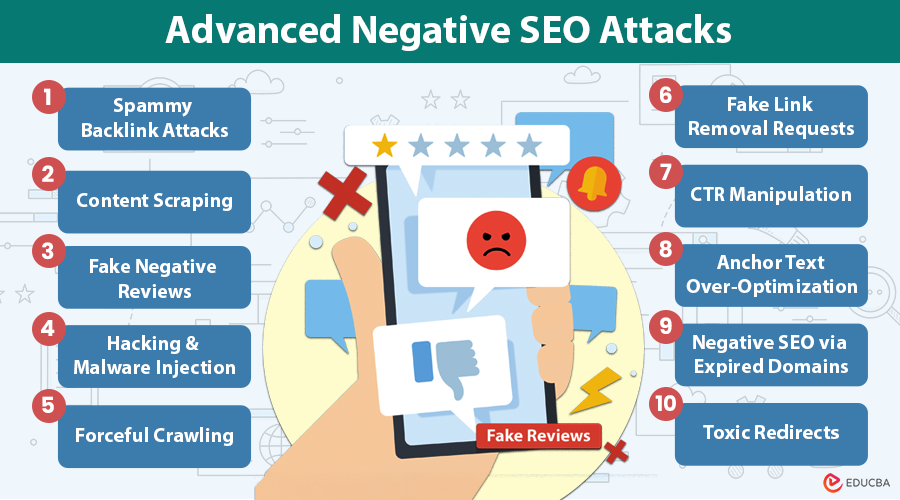
Today I want to talk about something different: I found out my site has been targeted by a private blog network (PBN), and I want to explain what that means and what I’m doing about it.
How I Found Out
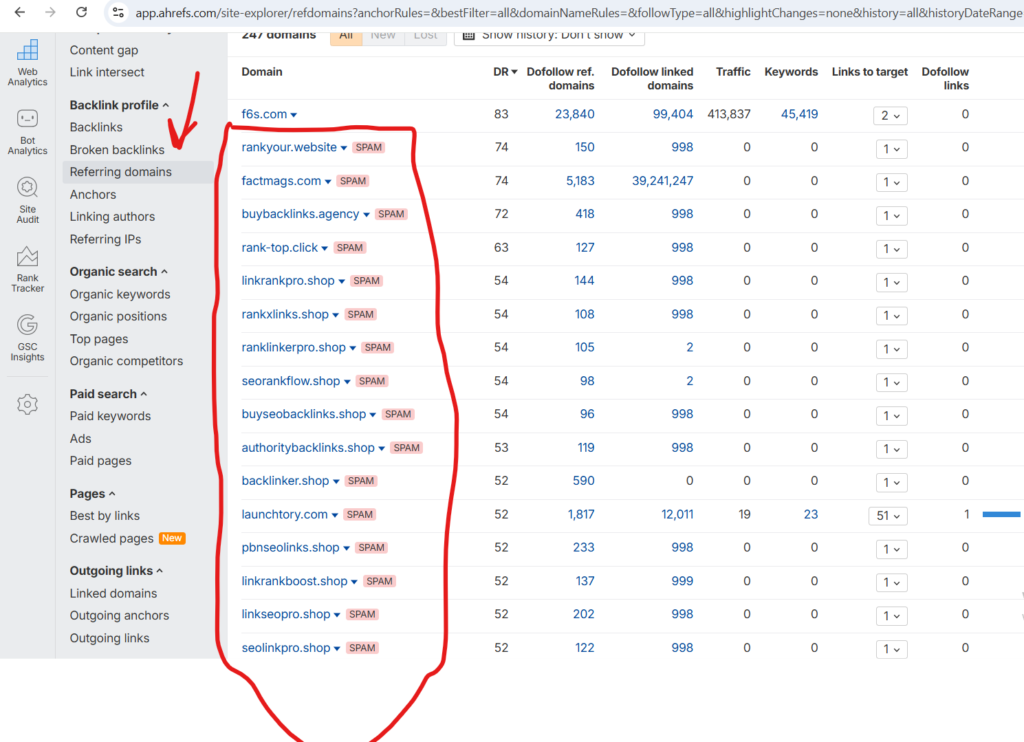
I noticed it while checking my Ahrefs audit report. According to that report my site apparently has a “Domain Authority” of 21. Domain Authority used to be a big deal in SEO: a score based on the backlinks pointing to your site. People used to buy and sell links specifically to boost this number. I think most of us in this space have realized by now that the metric itself is pretty meaningless, even though I used to check mine too.
The real problem appeared when I looked at my own backlinks. On my own projects I usually add a small credit line, something like “developed by Guray,” with a link back to my main site. Those links had completely disappeared from the Links section of Google Search Console. The section was empty.
A Pattern I’d Seen Before
This isn’t actually new. Years ago, around 2020, I went through a similar thing. I bought paid backlinks for a project. Paid backlinks have always worked this way too: they show up in Search Console for the first week or so, then get removed within a month. It seems to happen even faster now. But this time it wasn’t a link I paid for. Someone built a network with copious amount of spam domains, loaded them with junk links, and pointed a chunk of them at my site, all without my knowledge or money ever being involved.
The strange part is that Google Search Console itself never flags this. There’s no manual action notice, nothing. The only way I found out was through a third-party tool. Google’s official line is that they ignore toxic links and that you’ll get a manual action notice if something is actually wrong. In practice, I don’t have any manual action, and I’m still seeing reduced visibility, what people call a “shadow ban.” So the bad links exist, they’re real, and yet officially “nothing is happening.”
What I Actually Do for Content
I run an aggregation project related to small businesses. I pull in content, but always credit the original source, link back to it, and limit how much I take, generally no more than two or three paragraphs per source. Because of that I don’t get copyright complaints. Years ago, when we used to take entire articles, we’d get DMCA notices regularly through our mail. That doesn’t happen as much as before because the sourcing is done properly.
Why I Think This Happened
My theory is simple: whoever built this network can’t rank their own spam domains, so instead they’re using them to drag other sites down. It costs real money to register thousands of domains, and there’s no reasonable way that’s an accident. I never paid for backlinks from anyone like this, and I never asked anyone to send traffic or links to my site. It looks like a deliberate attempt to hurt a competitor rather than a random spam campaign.
By the time I finished going through the Ahrefs report, I had identified 244 separate spam domains pointing at my site, all added between May and June this year.
Building the Disavow List
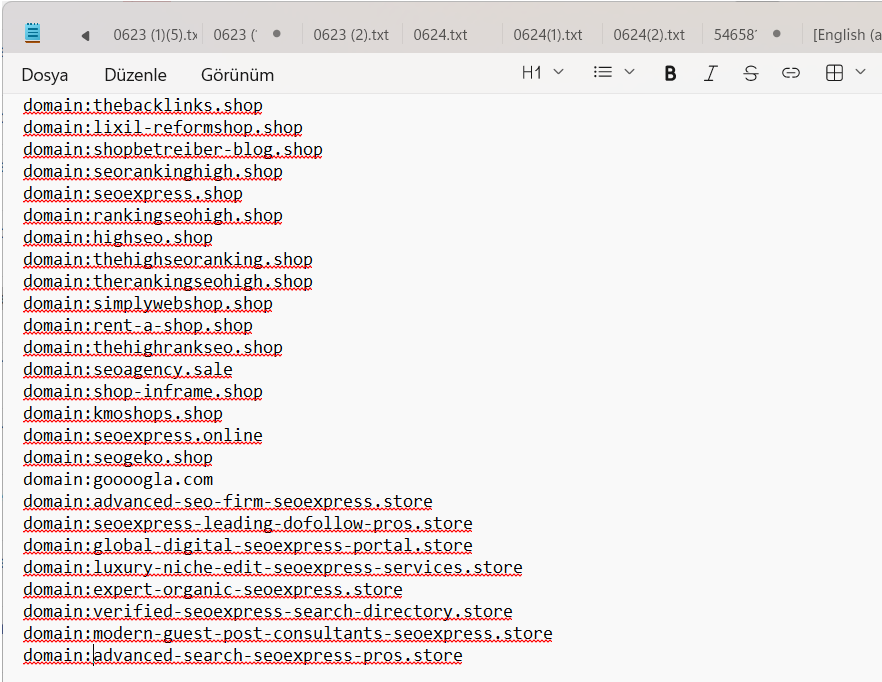
The fix is Google’s Disavow Links tool. You create a plain text file listing each spam domain in the proper format, one per line, then upload it through the tool. I wanted to export the list directly from Ahrefs, but that feature is locked behind a paid plan, so I went through the report manually and copied each domain over one by one.
You put each domain into a line with domain:<domain you want to disavow> format
Honestly, I don’t think tools like Ahrefs, Semrush, or similar platforms are worth paying large amounts of money for. Good content does more for your site than any of these subscriptions. I’ll keep updating my disavow list as new spam links show up, and I plan to share the file publicly so anyone else hit by the same network can use it directly instead of doing the manual work themselves.
Link for the disavow txt file.

Why This Isn’t Worth Losing Sleep Over
I’ve tested buying backlinks before, and it did nothing measurable. The links show up briefly in Search Console and vanish within a week or two, with no lasting effect either way. Spam backlinks work the same way: they don’t meaningfully hurt your real rankings on their own. What actually happened to my project links being removed bothered me more than any ranking change, since those were genuine, organic credits I’d placed myself.
A handful of strong links from credible sources, maybe seven or eight, including something like a government or .edu domain, is worth far more than thousands of low quality ones. I had a project once where a city government’s event page linked to our ticket-selling site as the official ticket source. That one organic, credible link had lasting, evergreen value, completely unlike anything from a spam network.
The Bigger Picture on Content and SEO
The old model of churning out two or three generic, keyword-stuffed articles a day is outdated. Search engines and readers alike are tired of that kind of filler content. If you run a business, you’re already the expert in your field, whether you’re a plumber, a landscaper, or a burger shop owner. Talk about what you actually know: why your burger sauce is made a certain way, how to take care of a lawn, how to care for a sapling. Even recording a short voice note and turning it into a post with AI counts. Repurposing what you already share on social media works too. That kind of authentic content matters more than throwing money at agencies or paid link schemes ever will.
If This Happens to You
If you ever notice something similar, check your backlink profile with two or three different tools (Moz, Ahrefs, Websiteseochecker) rather than panicking. If you find spam domains pointing at your site, list them and submit them through Google’s Disavow tool.
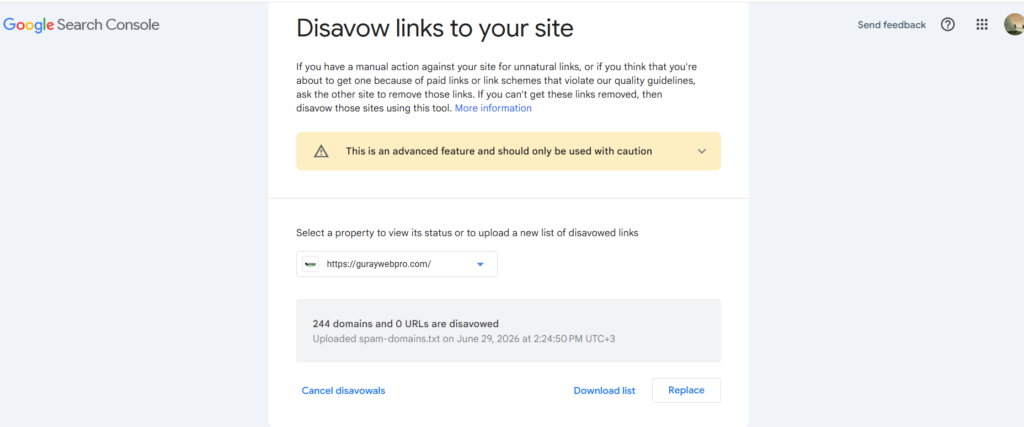
It only takes a few minutes once you have the list ready. I’ll keep updating and sharing my own disavow file so people targeted by the same network don’t have to repeat the work I did.
There’s no need to obsess over this or feel personally attacked in a way. It happens, it’s outside your control, and it doesn’t change the fact that real, original content is still what works. I didn’t pay for any of this, didn’t ask for it, and don’t plan to start chasing backlinks now either.
You can find more of my writing on making money online and online career / freelacing advice on my homepage at Guray Web Pro, and feel free to reach out on WhatsApp if you have questions. Thanks for reading.






Recent Comments